About
Philippe Paquet
Biography
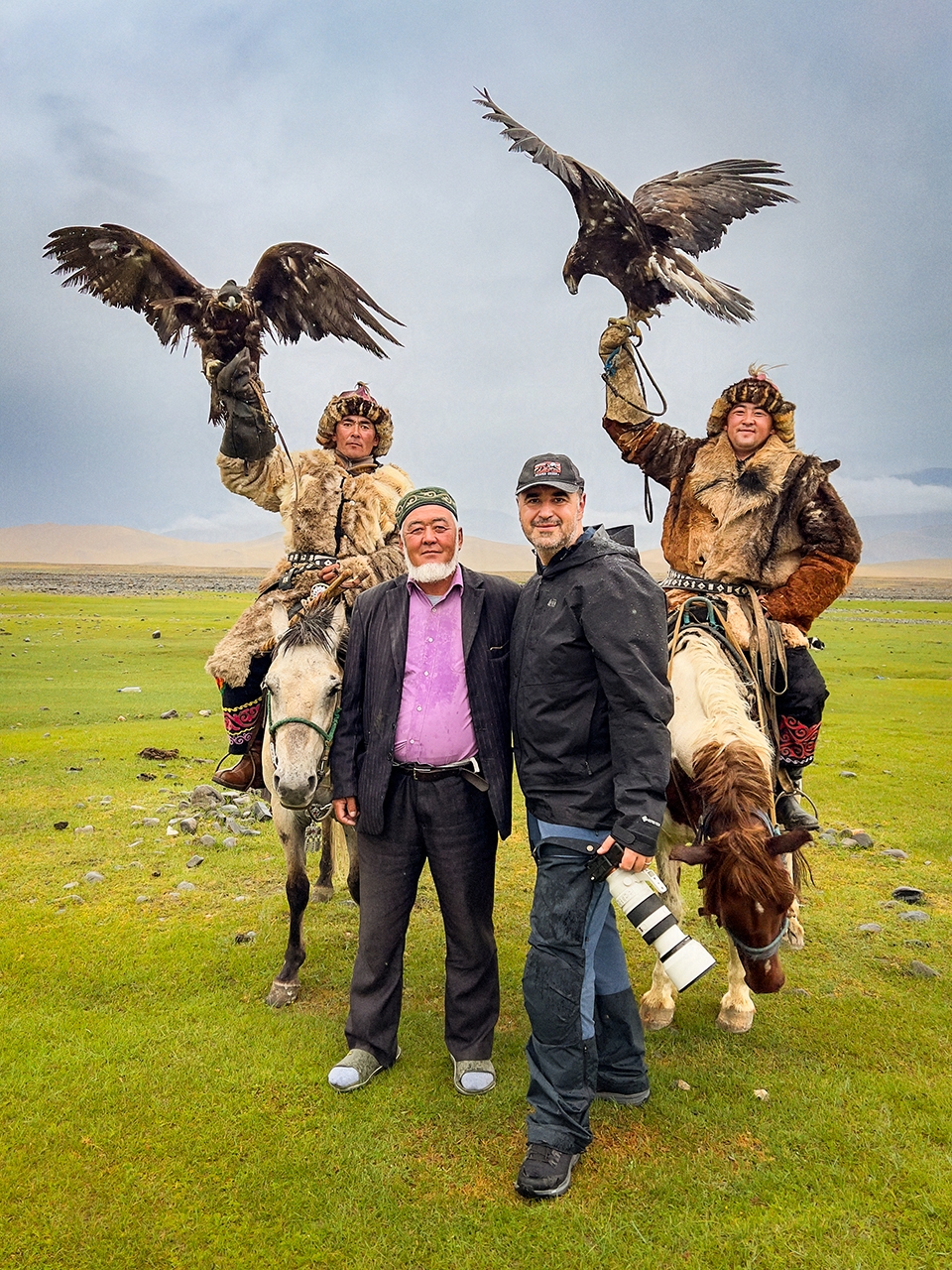
Philippe Paquet is a French fine-art photographer based in Los Angeles. Through portraiture, landscape, and photographs of ritual, he explores cultural identity and the relationship between people and their environments. He is particularly interested in how geography shapes those environments and how living within them influences traditions, cultural practices, and ways of life.
His work includes photographs made in Mongolia and Mexico, portraits made in Papua New Guinea and of Waorani people in Ecuador, and photographs from Bolivia and Peru, where his focus has been primarily on landscape, alongside portraiture. Landscape is both an independent subject within his practice and part of the context in which he considers human presence and cultural identity.
His exhibition Mongolia: From the Gobi Desert to the Altai Mountains has been presented at the Museo Nacional de las Culturas del Mundo in Mexico City (2025–2026) and the Museo Regional de Nayarit in Tepic (2026).
His photographs are held in the permanent collections of the Museo Nacional de las Culturas del Mundo in Mexico City and the International Museum of Dance in San Francisco.
The physical print is central to Paquet’s practice. He places particular importance on the photograph as an object, developing his work toward exhibition-quality prints produced in very small editions.
Practice
Artist Statement
I am interested in how geography shapes the environments people inhabit, and how life within those environments influences culture, identity, and ritual. My attention to place extends beyond the visible landscape to the conditions in which people live and the ways they respond to their surroundings.
Portraiture brings these interests to the scale of an individual. I attend to expression, posture, dress, and gesture, looking at how cultural identity becomes visible while remaining attentive to the particular person before me. In photographing ritual, I explore how traditions and beliefs take form through actions, objects, and settings.
Landscape is equally important to me as a subject in its own right. Light, form, and scale can be the starting point for a photograph, whether or not a person appears in the frame. A landscape may stand independently or, alongside portraits and photographs of ritual, help establish the environment in which cultural life takes shape.
These interests connect my work, but their balance changes between bodies of photographs. I want to remain attentive to what is particular to each person, community, and environment, rather than make different places illustrate the same idea.
The physical print is the final form of my work. Scale, surface, color, and tonal relationships are integral to the photograph and to the experience of looking at it.
The photograph as an object
Prints
I have the print in mind from the moment I take a photograph. It informs how I approach the image from the beginning, rather than being a presentation decision left until later. Photographing and developing the print are connected parts of my creative work.
Each photograph requires its own approach, developed through repeated testing, adjustment, and evaluation. A single image may go through twenty revisions and several changes of printing process before I am satisfied with the result. These decisions are guided by what the particular photograph needs, rather than a method applied uniformly across the work.
I print at large scale, where the relationship between fine detail and the overall image requires particular care. I want a photograph to hold together both when seen from a distance and when examined closely. The smallest adjustments can matter to the finished work, but precision alone is not the goal: every decision must serve the image.
Depending on the photograph, I work with archival pigment, chromogenic (C-print), silver gelatin, or platinum/palladium printing. The choice of process and paper evolves through this work of testing and refinement.
My photographs are offered in limited editions defined by print size. For each image, no more than nine prints are offered for sale at any one size, with smaller editions for larger formats.
Selected works are available through Galeria Esmeralda and Your Daily Photograph (Duncan Miller Gallery). Please contact me for information about individual works, including dimensions, printing processes, edition details, pricing, and availability.
Collections & exhibitions
Collections, Exhibitions & Awards
Permanent Collections
- 2026:Museo Nacional de las Culturas del Mundo (Mexico City, Mexico)Portrait of a Nomad and Her Camel, Three Generations of Eagle Hunters, and The Last Light of the Golden SteppeEntered the collection on October 22, 2026: Read about the donation
- 2025:International Museum of Dance (San Francisco, California, USA)Voladores: Dancing in the Sky and No Parking, Just Tango
Forthcoming
- 2026:Solo Exhibition at the Congress of the Union, Legislative Palace of San Lázaro (Mexico City, Mexico)October 27 to October 29, 2026: Opening reception on October 27 at noon
- 2026:Solo Exhibition at the Mazatlán Archaeological Museum (Mazatlán, Mexico)Details to be announced
Exhibitions
- 2026:Group Exhibition at Mercado La Paloma (Los Angeles, California, USA)Day of the Dead Art Exhibition, organized by Esperanza Community HousingOctober 5 to November 16, 2026
- 2026:Solo Exhibition at the Regional Museum of Nayarit (Tepic, Mexico)Opened June 17, 2026: Opening
- 2025:Solo Exhibition at the National Museum of World Cultures (Mexico City, Mexico)August 14, 2025 to March 29, 2026: Opening, Press, Diplomatic reception, Interview, Cultural Day of Mongolia in Mexico
- 2025:Group Exhibition at Duncan Miller Gallery (Los Angeles, California, USA)August 8, 2025 to September 20, 2025: Opening
- 2012:Solo Exhibition at Hangar Gallery (Santa Monica, California, USA)
- 2011:Solo Exhibition at Hangar Gallery (Santa Monica, California, USA)
- 2011:Group Exhibition at Arena 1 Gallery (Santa Monica, California, USA)
Awards and cultural recognition
- 2025:
- 2025:
- 2024:Silver and Bronze Awards at the Epson International Pano Awards
Inquiries
Prints, exhibitions, and collaborations.
For print availability, gallery representation, exhibition proposals, press assets, or curatorial review, please contact the studio.
Contact the studio